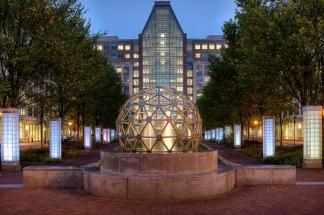
 United States Patent & Trademark Office
Over the past five plus years, I examined hundreds of patent applications in what was once the USPC 701 class. Although the classification has changed, the subject matter still revolves around data processing for both vehicle control systems, navigation aids, and relative locationing services. This broad realm of subject matter has brought a cornucopia of interesting inventive matter including autonomous vehicles, smart phone navigation protocols, air craft control systems, in-vehicle dialysis machines, toys, navigation based advertisement generation, and visual aids for visually impaired humans.
Having been hired by the USPTO at a point when the office was experience record backlogs, I realized that as an examiner I could help alleviate this problem through streamlined stakeholder interactions. My preferences for facilitating compact prosecution include conducting purposeful Examiner interviews as well as producing a clear prosecution record.
In the fall of 2016 I passed the Partial Signatory Program, allowing me to approve non-final office actions. A year later, I passed the Full Signatory Program which granted me the authority to approve all of my own work well as that of junior examiners with whom I have consulted. Although I’ve been with the office for over a half-decade, each day presents new opportunities for self-improvement and growth. It’s an exciting place where a curious and ambitious person can indulge in new challenges and the rewards of overcoming them.
Rensselear Polytechnic Institute
Prior to working at the Patent Office, I spent a semester with the RPI Office of Technology Commercialization in Troy, New York. This experience was a highlight of my time at Albany Law School. Provided with responsibility and autonomy, I spent my time at the OTC working with the interests of the Institute in mind. An early duty included conducting a thorough review of past Institute research disclosure and intellectual property assignment documents and the revision of those documents to appropriately protect the interests of the Institute and its researchers.
One of my primary duties with the Institute was to evaluate the disclosures of researchers for novel and marketable subject matter. This task included conducting patentability searches, evaluating patentability opinions of outside counsel, doing market research to identify potential value of the disclosed matter, and performing cost benefit analysis of pursing patent protection for the disclosed matter. Underscoring much of the work of the OTC was the importance of the Bayh-Dole Act to our daily activities.
Framing each day’s work, I had the privilege of being mentored by the Director of the office who was also former Director of Patents and Licensing at the Wisconsin Alumni Research Fund (WARF) as well as the of the technology transfer office University of Florida. The advice and time he shared me were instrumental in guiding my ambitions in the Intellectual Property field.
Whiteman Osterman & Hanna LLP
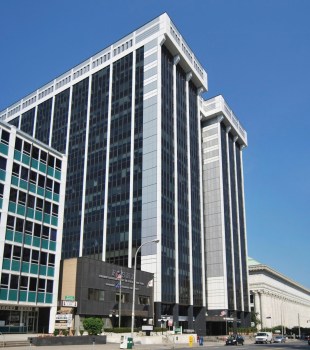
From the 19th floor of One Commerce Plaza, overlooking the capitol of New York State, I worked with a Partner in the Business, Corporate and Financial Services practice group who served as RPI’s outside counsel for drafting and negotiating licensing agreements for Institute intellectual property. Freedom in initially drafting agreements and revisions worked nicely with one-on-one review between iterations and their final implementation. Taking part in the drafting and revision process, I also had the opportunity to take part in negotiations between institutional and corporate titans.
Beyond the magnitude of the transactions taking place, my mentor firmly instilled the importance of cooperative negotiation, being a responsible attorney, and thinking strategically when drafting any sort of agreement. With his insight, I realized that a thorough and well-enabled contract is essential for a fruitful business relationship.
Hinman, Howard & Kattell, LLP
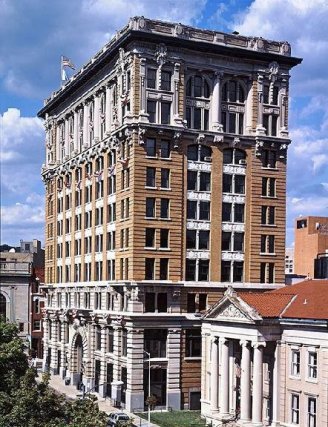
Halfway into my semester with Mark Levy and Associates, his firm was absorbed by HH&K. My work continued under the tutelage of Mr. Levy from the Security Mutual Life building overlooking the picturesque Binghamton courthouse and soldier’s monument. My work on prosecuting mechanical applications continued within the setting of a well-established New York firm. Beyond laying the foundation of my patent law education, and introducing me to the wonderful characters who practice it, I gleaned how a a patent practice can be seamlessly integrated into a full-service law firm.
 Mark Levy and Associates
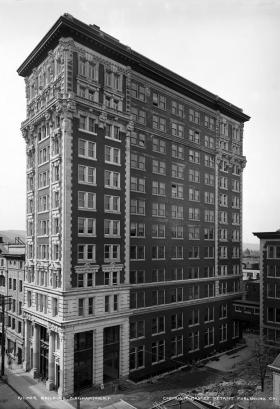
In my final semester as a Mechanical Engineering student, I was hired by the last of the large boutique patent firms in the city of Binghamton as a patent prosecution intern. I was provided a docket of several pending applications at varying stages of prosecution. Once I had read and reread the contents of each file, I began working to draft my first responses to Office Actions. With each draft I turned in, I received thoughtful corrections and comments; gradually seeing fewer red marks as time went on. Knowing that my arguments were adopted in official responses continued me to forge on inspiring me to gain an appreciation for the MPEP and the intricate dance that is prosecution. Under the supervision of Mr. Levy, I had my first experience in dealing with Patent Examiners. Reading those actions and communicating with the Examiners provided me with useful insight that has helped shaped my view to this day of what a great Patent Examiner should be.
 Richard A. Goldman